@[email protected] to Programmer [email protected]English • edit-22 years agoIt's easier to remember the IPs of good DNSes, too.lemmy.sdf.orgimagemessage-square185fedilinkarrow-up1378arrow-down164file-text
arrow-up1314arrow-down1imageIt's easier to remember the IPs of good DNSes, too.lemmy.sdf.org@[email protected] to Programmer [email protected]English • edit-22 years agomessage-square185fedilinkfile-text
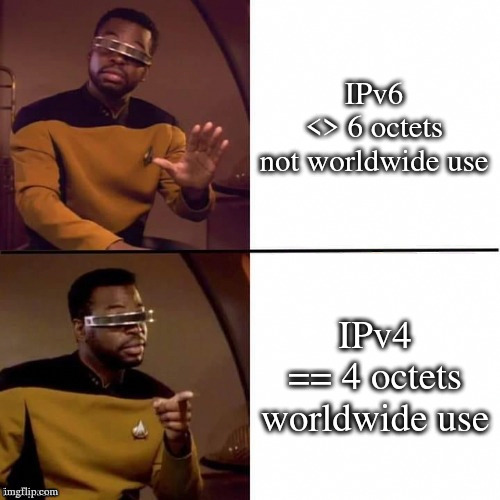
minus-square@[email protected]linkfedilinkEnglish2•edit-22 years agoF# definitely and maybe Haskell and OCaml as well? Elixir and Erlang use it as a binary concatenation operator.
minus-square@[email protected]linkfedilink3•2 years agoYes for OCaml. Haskell’s inequality is defined as /= (for ≠). <> is usually the Monoid mappend operator (i.e. generalized binary concatenation).


F# definitely and maybe Haskell and OCaml as well? Elixir and Erlang use it as a binary concatenation operator.
Yes for OCaml. Haskell’s inequality is defined as
/=(for ≠).<>is usually the Monoidmappendoperator (i.e. generalized binary concatenation).